Հայ
Հայ
 Рус
Рус
How to Improve Your English Pronunciation | Pronunciation Guide
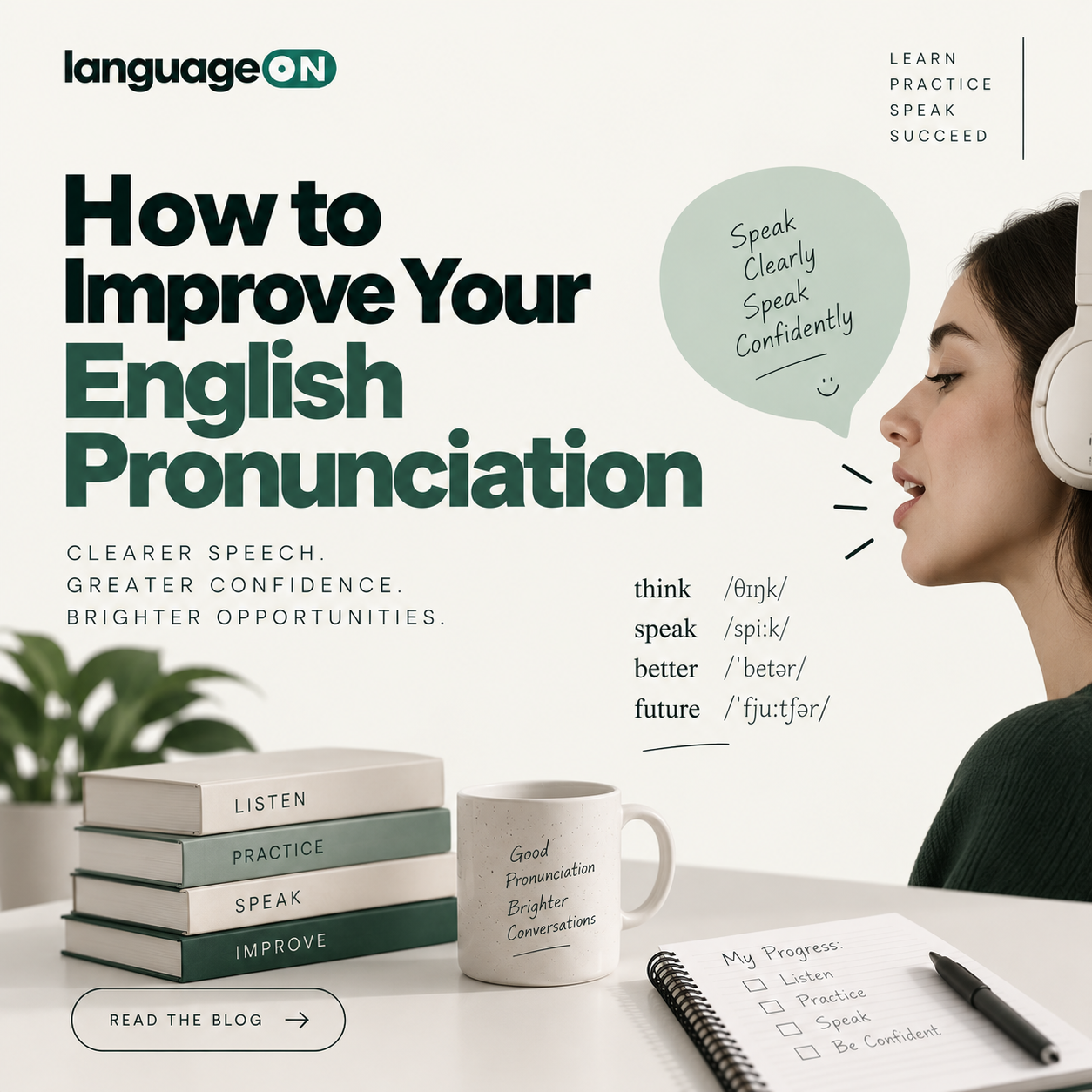
Why Pronunciation Matters?
Pronunciation plays a major role in communication. Even with strong grammar and vocabulary, unclear pronunciation can make conversations difficult.
Good pronunciation helps you:
- Speak more clearly
- Communicate confidently
- Improve listening comprehension
- Perform better in IELTS and TOEFL exams
How to Improve Your Pronunciation
1. Listen to English Every Day
Great resources include:
- TED Talks
- BBC Learning English
- Podcasts
- YouTube Educational Channels
- Movies and TV Shows
Focus on how words are pronounced, not just what they mean.
2. Practice Shadowing
Shadowing involves listening and immediately repeating what a native speaker says.
This helps improve:
- Pronunciation
- Intonation
- Fluency
- Speaking rhythm
3. Learn the IPA Symbols
The International Phonetic Alphabet (IPA) helps you understand the exact pronunciation of words.
Example:
- Thought /θɔːt/
- Through /θruː/
- Though /ðoʊ/
4. Record Yourself Speaking
Recording yourself helps identify pronunciation mistakes and track progress.
Try recording:
- Short stories
- IELTS Speaking answers
- Daily conversations
5. Focus on Intonation
English relies heavily on word stress and sentence rhythm.
Example:
- PREsent (noun)
- preSENT (verb)
Correct stress makes your speech more natural.
6. Speak as Much as Possible
The best way to improve pronunciation is through regular practice.
Join:
- Speaking clubs
- Conversation groups
- English courses
- Language exchange programs
Common Pronunciation Mistakes
Only studying grammar
Not listening to native speakers
Avoiding speaking practice
Ignoring stress and intonation
Being afraid of making mistakes
Internal Links:
Business English & Professional Communication
English Conversation & Speaking