Հայ
Հայ
 Рус
Рус
English Levels (A1-C2) Explained Simply | LanguageOn
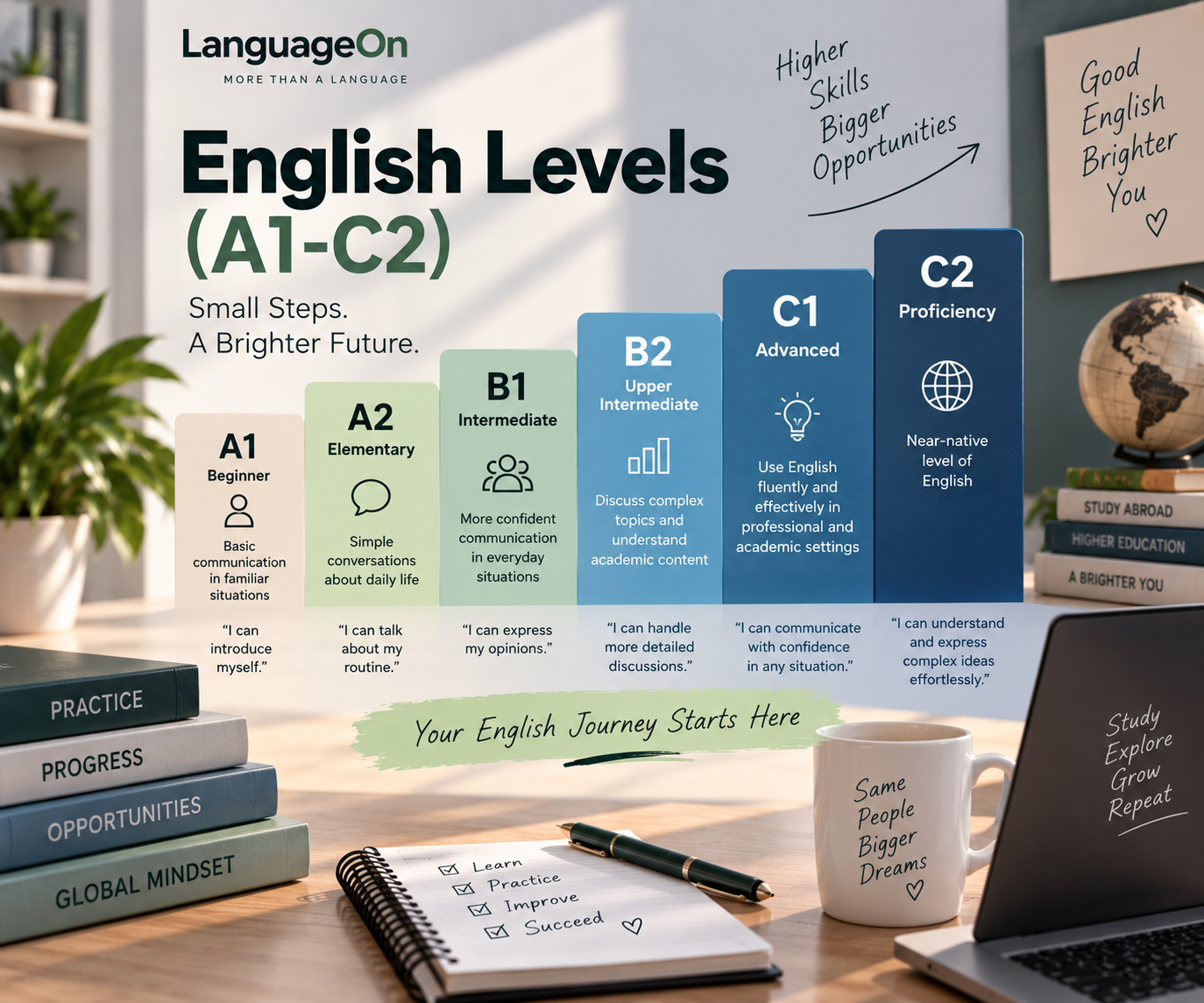
If you are learning English, you have probably seen labels such as A1, A2, B1, B2, C1, and C2. These levels are part of the CEFR (Common European Framework of Reference for Languages), an international standard used to measure language proficiency.
Let's look at what each level means.
A1 – Beginner
At this level, you can:
- Introduce yourself
- Ask and answer simple questions
- Understand basic phrases
- Communicate in very familiar situations
Example:
- What is your name?
- Where are you from?
A2 – Elementary
At this stage, you can:
- Talk about daily routines
- Describe your family
- Handle basic conversations
- Understand common expressions
Example:
I usually wake up at 7 a.m. and go to work.
B1 – Intermediate
At B1, you become a more independent user of English.
You can:
- Express opinions
- Discuss plans and experiences
- Understand straightforward texts
- Follow the main points of conversations
B2 – Upper Intermediate
This is often the minimum level required by universities and employers.
You can:
- Participate in detailed discussions
- Understand academic content
- Write formal emails
- Communicate confidently
C1 – Advanced
At this level, you can:
- Understand complex texts
- Communicate fluently
- Write academic papers
- Participate in professional discussions
C2 – Proficiency
The highest CEFR level.
You can:
- Understand virtually everything you hear or read
- Use advanced vocabulary naturally
- Communicate like an educated native speaker
How Can You Find Your Level?
The best way is to take a professional placement test.
General English Courses:
https://languageon.am/general-english
Related Programs
TOEFL Preparation
IELTS Preparation
SAT Preparation
Every level from A1 to C2 represents an important step in your English-learning journey. The key is starting at the right level and progressing consistently.
LanguageOn helps students identify their level and achieve their academic and professional goals. Contact us